
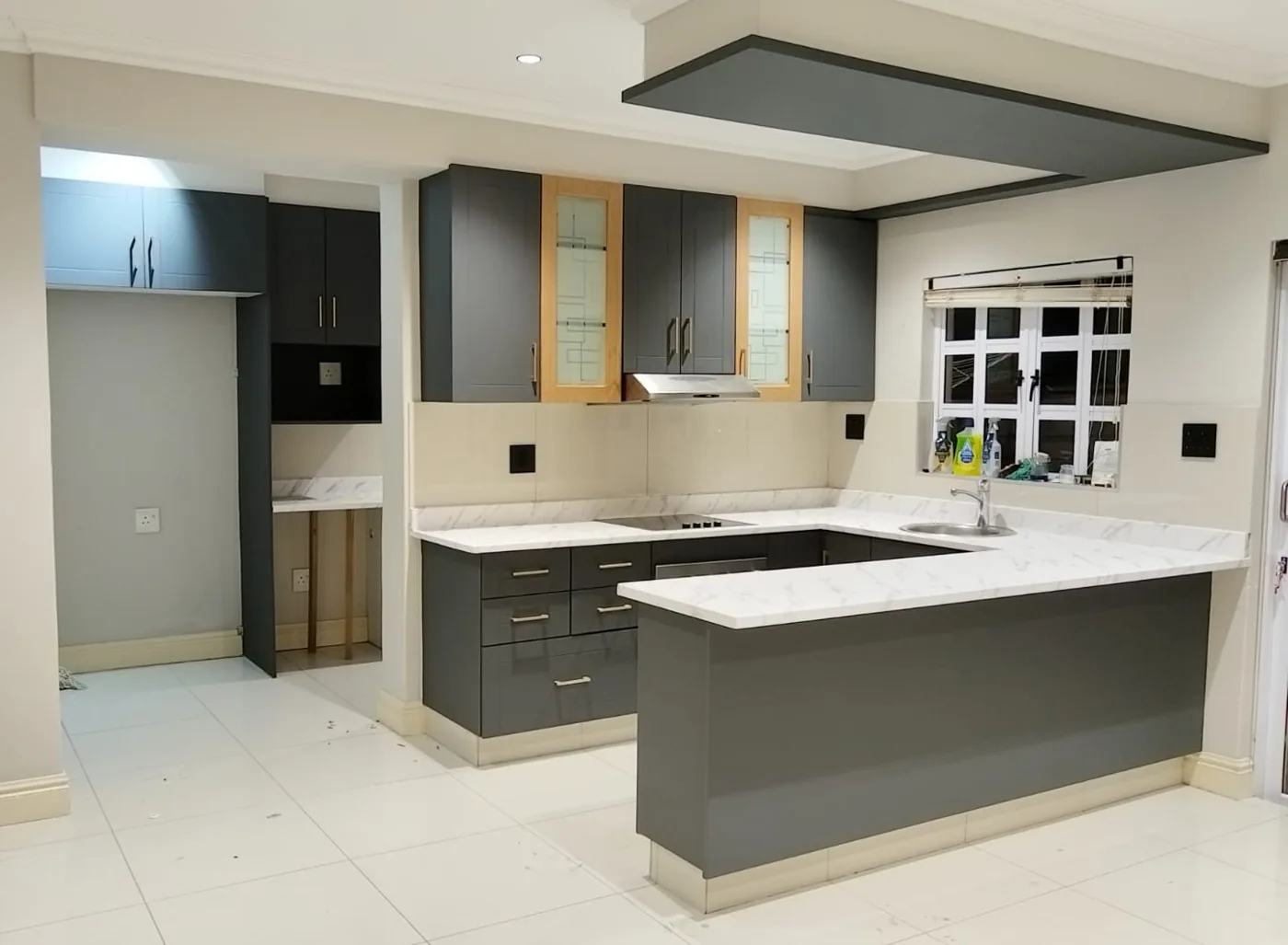
Metamark MiA kitchen wrap
Our first kitchen in Metamark MiA, a charcoal finish, fitted in Durban.

A new finish for suitable cupboards, furniture and interior surfaces.
Architectural film is applied directly to existing surfaces - glass, laminate, wood, metal and tile - to change the finish, colour or texture at a fraction of renovation cost. Kitchens, offices, bathrooms, retail spaces and residential interiors across Durban and KZN.
Our first kitchen in Metamark MiA, a charcoal finish, fitted in Durban.
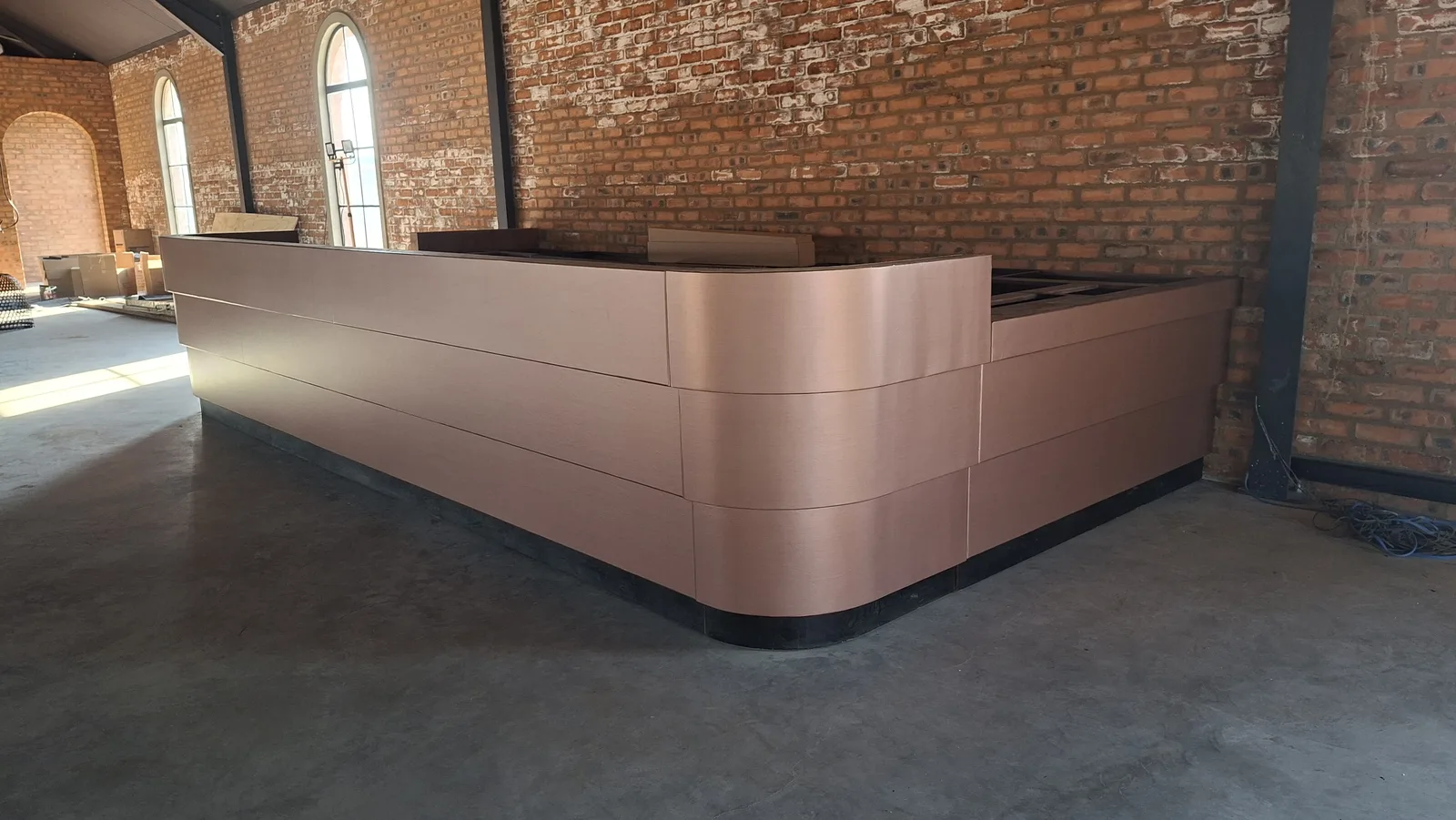
A raw wood bar counter wrapped in Cover Styl NH60 Copper.
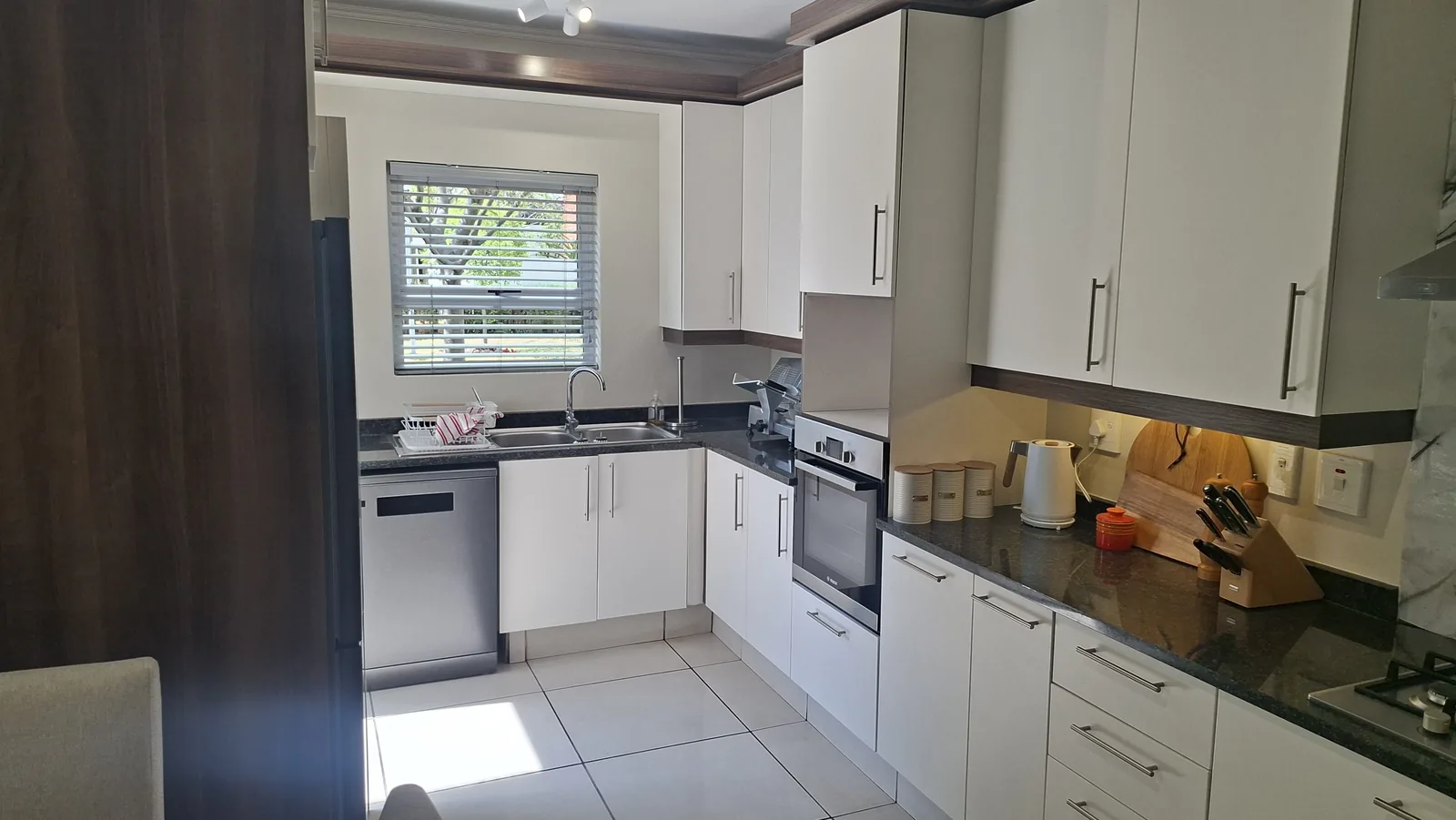
Cupboard doors and selected carcass interiors wrapped in Cover Styl NE77, retaining some dark elements for contrast.
Architectural film is a high-quality vinyl-based film applied directly to existing surfaces to change their appearance. It works on glass, laminate, MDF, wood, metal, and many tile surfaces - transforming them without removal or replacement.
The film comes in hundreds of finishes: wood grain, stone, marble, solid colour, frosted, metallic, and textured. It is applied with precision over the existing surface, bonded firmly, and trimmed to the edges so the finished result looks intentional and clean.
Architectural film can reduce the need to replace sound cabinetry or furniture. Cost and installation time depend on preparation, scope and the alternative being compared; we confirm these for your project.
Architectural film is used across residential, commercial, and hospitality environments. The same material and technique that refreshes kitchen cupboards can transform office glass partitions, bathroom vanity units, internal doors, retail counters, and furniture surfaces.
In commercial settings, frosted and patterned film on glass partitions creates privacy, brand presence, and a professional finish without removing the glass. In hospitality, bar fronts, lift interiors, and feature walls can be refreshed between seasons without construction.
For homeowners and landlords, architectural film provides a cost-effective route to a new look in kitchens, bathrooms, and living spaces. For rental properties, it offers a durable refresh that holds up to daily use with product selection, care and eventual removal dependent on the underlying surface.
Interior designers and architects regularly specify architectural film as a finish alternative in renovation and new build projects. It delivers a premium result at a fraction of the cost of replacement cabinetry, custom laminate or veneer work - and it installs in days rather than weeks.
For designers working with clients on kitchen, bathroom or commercial fitout briefs, architectural film expands what is achievable within the budget. Wood grain, marble, stone, solid colour and metallic finishes are all available in ranges used by professional specifiers across South Africa.
If you are a designer or architect working on a project in Durban or KZN, we are set up to provide samples, scope quotes per room or fitout area, and coordinate installation around your project timeline. Send the project scope and we will come back with a quote and timeline that works with your brief.
The architectural film market has a small number of professional-grade brands that design professionals and commercial installers specify by name. The three main ones used in South Africa are Cover Styl', 3M Di-Noc, and Bodaq. Each has a broad range of finishes and a track record across residential and commercial applications.
Cover Styl' (distributed by Maizey Plastics in South Africa) covers wood, marble, stone, metal and solid colour finishes and is used across kitchens, bathrooms, furniture and commercial interiors. 3M Di-Noc is one of the most recognised architectural film ranges globally, with over a thousand design options and strong commercial credentials for office, hospitality and retail applications. Bodaq is a widely-used Korean film brand with comprehensive coverage of interior finish categories.
The right film for a project depends on the surface, the environment, the finish direction, and the durability required. High-humidity areas like kitchens and bathrooms need film rated for that exposure. Commercial high-contact surfaces need a film specified for durability. We can guide the material selection once we understand the scope.
The process begins with understanding the surface type, condition, location and finish direction. Send photos, dimensions and a description of the space and we can guide whether architectural film is the right approach and which film will perform well in that environment.
Surface condition matters. Film performs best on clean, smooth, structurally sound surfaces. Where surfaces have damage, swelling or deterioration, repairs may be needed first. We assess this before quoting so there are no surprises during installation.
Once the scope is agreed, installation is planned around the space - residential work is typically done room by room with minimal disruption, and commercial installations are scheduled to avoid business downtime where possible.
Send your project details, location and timing. We will come back to you about the right next step.
Leave your name, email address and suburb. We will contact you to discuss your project and collect any photos or details needed for your quote.
Architectural film works across residential, commercial and hospitality environments. Same material, same installation process - different surface and different result.
The most common architectural film application. Refresh cupboard doors, drawer fronts, panels and splashbacks without a full kitchen renovation.
Bathroom vanity units, shower screens, and splashback tiles transformed with film rated for high-humidity environments.
Frosted and patterned film on office glass creates privacy and presence. Retail counters, reception desks and commercial cabinetry can all be resurfaced.
Suitable internal doors, wardrobes and built-in furniture can be refinished after their condition and preparation needs have been assessed.
Request a quote with the project basics and we will help you choose the right route.